
What Is Aperture?
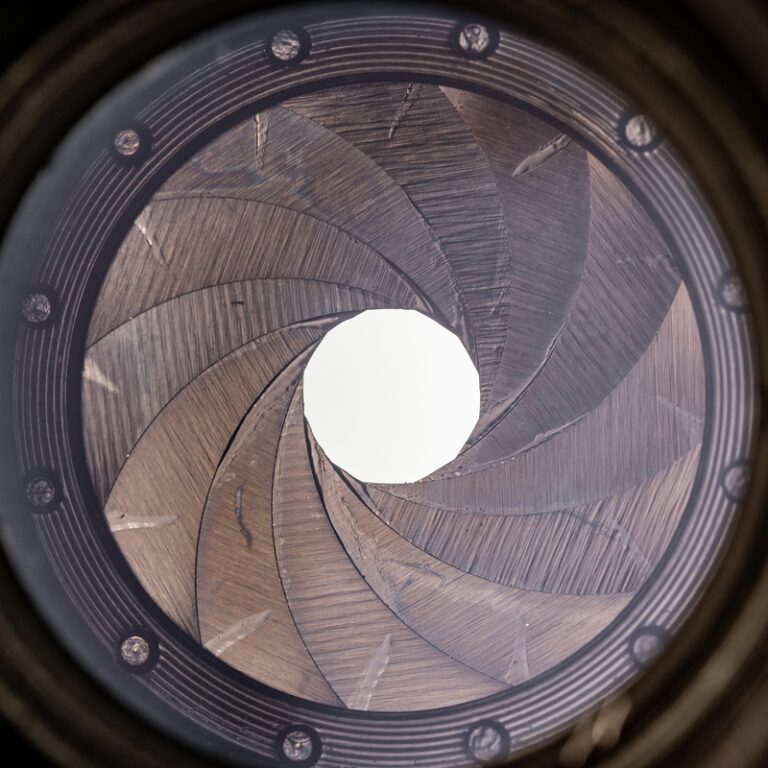
The aperture is a mechanism inside the lens made up of several overlapping blades. These blades form an adjustable opening that controls how much light passes through the lens and reaches the camera sensor.
Aperture is expressed using f-numbers, such as f/1.4, f/2.8, f/5.6, f/11, and so on.
- Wide aperture (small f-number, e.g. f/1.8): allows more light to reach the sensor.
- Narrow aperture (large f-number, e.g. f/16): allows less light to reach the sensor.
The maximum aperture of a lens is usually indicated on the lens itself, for example f/1.8. Some lenses also have a dedicated aperture ring that allows you to adjust the aperture directly.
On many modern lenses, however, there is no physical aperture ring. In this case, the aperture is controlled using the camera’s command dial or menu
Depth of Field
Besides controlling the amount of light entering the camera, aperture also has an important effect on depth of field.
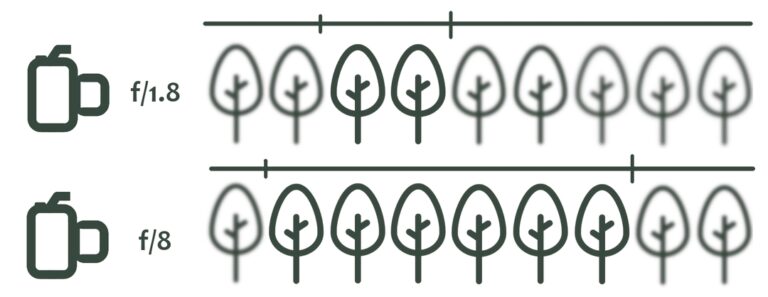
Depth of field describes the area in front of and behind the point of focus that appears acceptably sharp.
With a shallow depth of field, only a relatively small area of the image will appear sharp. Depending on the subject, lens, and focusing distance, this may range from several metres to just a few centimetres or even millimetres.
Depth of field
With a large depth of field, a much greater area of the scene can appear sharp, sometimes extending from the foreground all the way to the distant background.
The sharpest part of the image is around the point where the camera is focused, while objects farther away from this plane gradually become less sharp.
A small f-number, such as f/1.8, means a wide aperture and generally produces a shallower depth of field.
A large f-number, such as f/16, means a narrow aperture and generally produces a greater depth of field.
A shallow depth of field is particularly useful when you want to separate your subject from the background. However, aperture is not the only factor that affects background blur. Focal length and the distances between the camera, subject, and background also play an important role.
A larger depth of field can keep both the foreground and background sharp, which is often useful in landscape photography.
A shallow depth of field can create a beautifully blurred foreground and background, making it especially useful for portraits, wildlife, and certain types of macro photography.

A shallow depth of field can create a beautifully blurred foreground and background (eg.: portraits, macros)

A larger depth of field can keep both the foreground and background sharp, which is often useful in landscape photography.
Camera Modes – How Can You Control Aperture?
Most cameras offer several shooting modes. These can usually be selected using the mode dial or through the camera menu.
Av / A – Aperture Priority:
You select the aperture and the camera automatically chooses an appropriate shutter speed. This is one of the most useful modes when controlling depth of field is your main priority.
Tv / S – Shutter Priority:
You select the shutter speed and the camera automatically adjusts the aperture. This mode can be particularly useful when photographing moving subjects.
M – Manual Mode:
You control both aperture and shutter speed yourself. You can also set the ISO manually or, on many cameras, combine Manual mode with Auto ISO. Manual mode provides greater control but requires more practice.
P – Program Mode:
The camera automatically selects the basic exposure settings, while still allowing you to adjust several other settings.
Auto Mode:
The camera handles most settings automatically. It is quick and convenient, but gives you much less creative control.
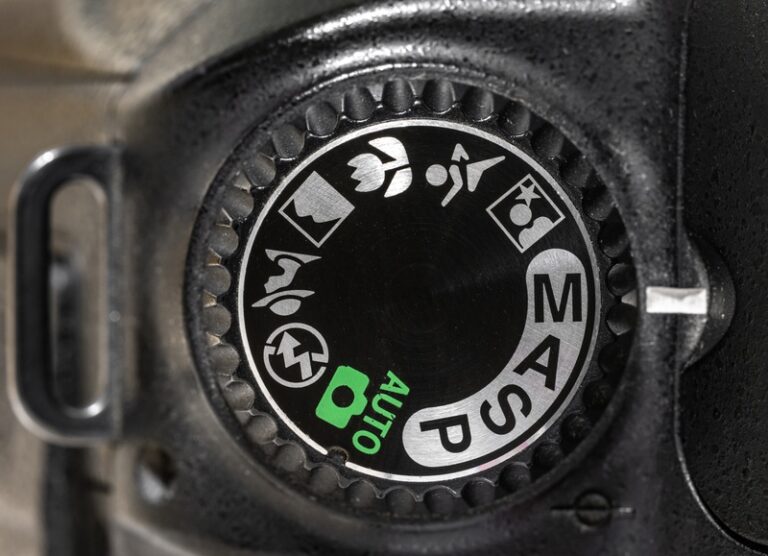
The appearance and available functions of the mode dial vary between camera models. Some cameras allow you to select shooting modes only through the menu.

Aperture and Smartphone Photography
Most smartphones have a fixed physical aperture, which means the size of the lens opening cannot be changed.
Instead, smartphones often use computational photography and software to simulate effects normally associated with different apertures. Portrait modes, for example, can use depth information and image processing to create artificial background blur.
Some more advanced smartphones feature variable physical apertures, although this is still less common than fixed-aperture designs.

Tip: When taking photos with a smartphone, you can often create stronger natural background separation by moving closer to your subject and increasing the distance between the subject and the background.
Summary
Aperture is one of the fundamental tools in photography. It influences two particularly important aspects of an image:
- how much light passes through the lens,
- and how much of the scene appears acceptably sharp.
Learning how to use aperture creatively is an important step towards gaining more control over your photography.
Try photographing the same subject using several different f-numbers and compare the results. Pay particular attention to how the background changes and how much of the subject remains sharp.
The better you understand aperture, the easier it becomes to make deliberate creative decisions instead of simply relying on automatic settings.
Common Examples
Portrait – f/1.8: A wide aperture can create a shallow depth of field and help separate the subject from the background.
Landscape – f/11: A narrower aperture can provide greater depth of field, helping to keep both foreground and distant elements sharp.
Night photography – f/2.8 or wider: A wide aperture allows more light to reach the sensor, which can be particularly useful in low-light conditions.
Macro photography – often f/8–f/16: At very close focusing distances, depth of field can become extremely shallow, so a narrower aperture is often useful for keeping more of the subject sharp.
📌 3 Things to Remember About Aperture
1. Aperture controls how much light passes through the lens
Small f-number (e.g. f/2.8) → wider aperture → more light.
Large f-number (e.g. f/16) → narrower aperture → less light.
2. Aperture affects depth of field
Small f-number → shallower depth of field → stronger background blur and better subject separation.
Large f-number → greater depth of field → more of the scene can appear sharp.
3. There is no single “correct” aperture
The best aperture always depends on the subject, available light, lens, and the result you want to achieve.
Experiment with different f-numbers and observe how they change both the technical and creative appearance of your photographs.