
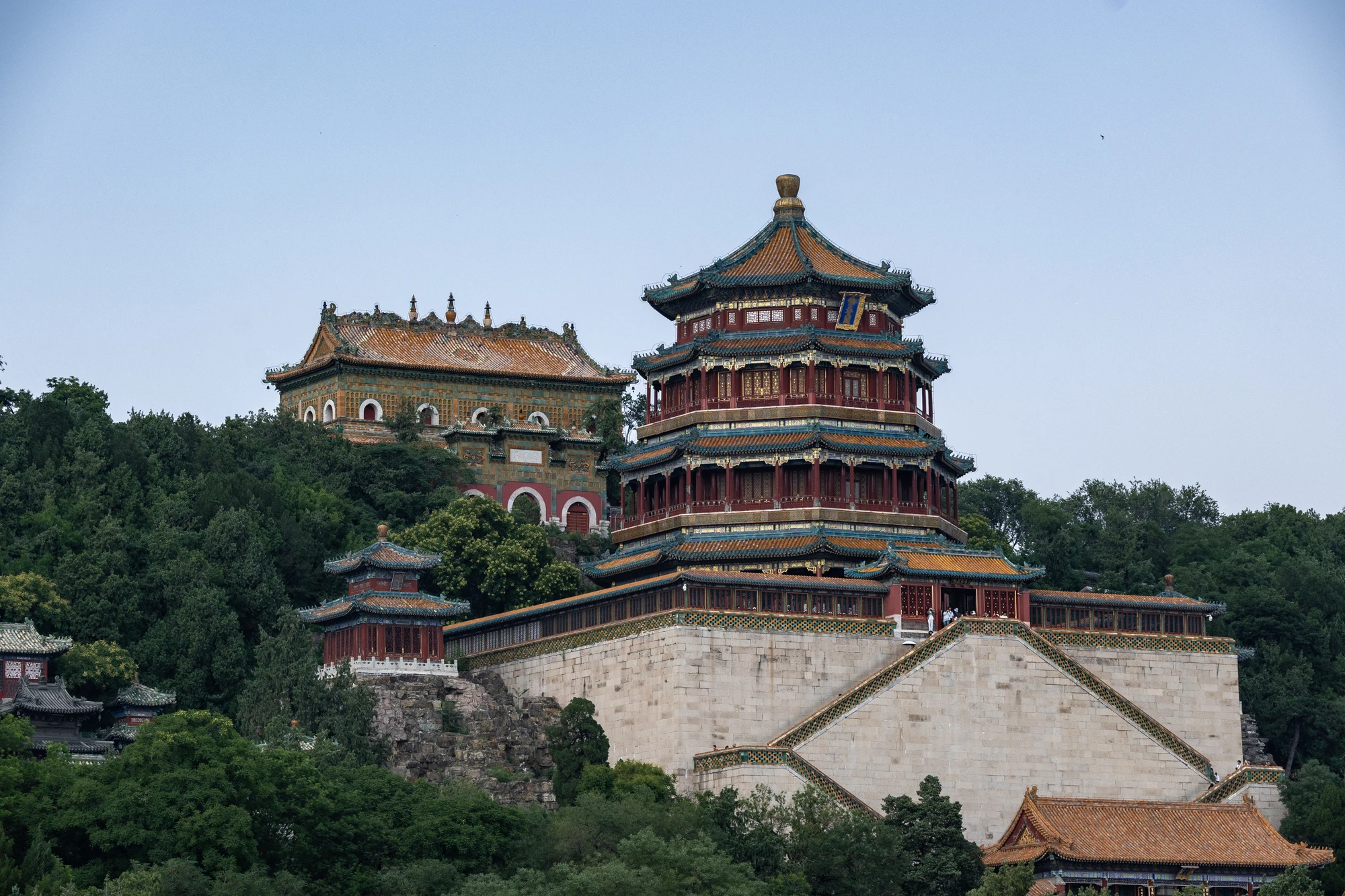
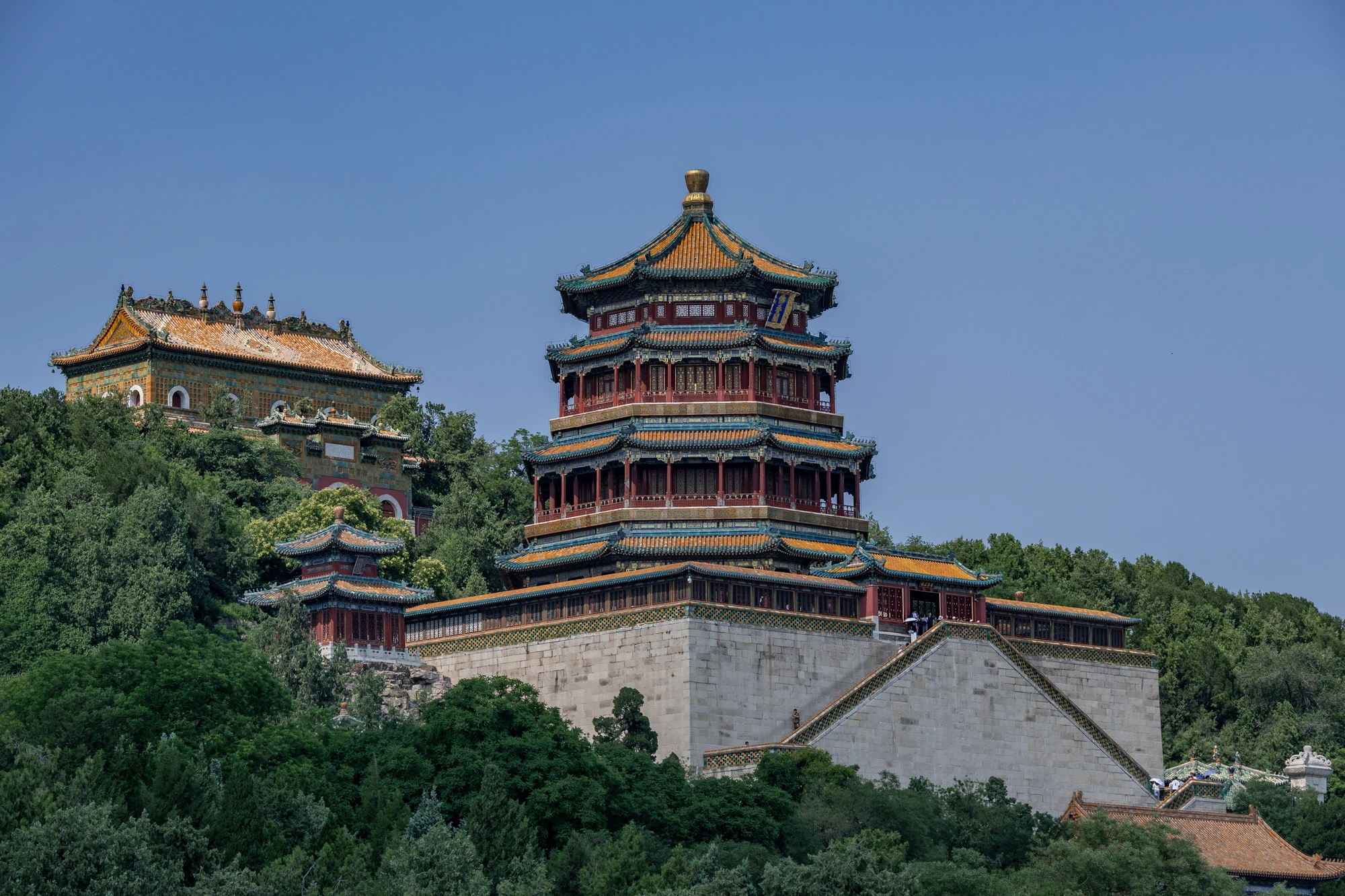


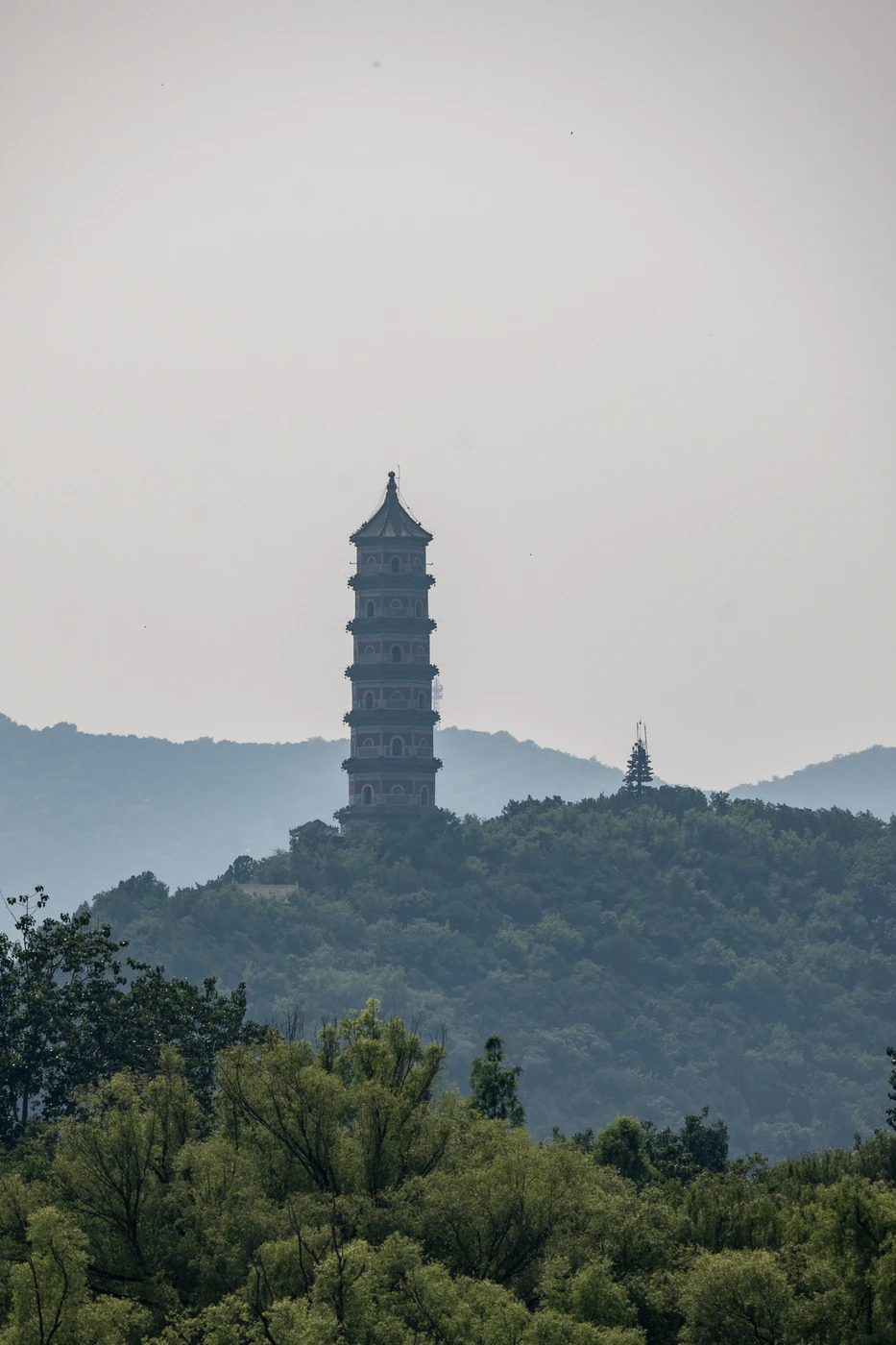
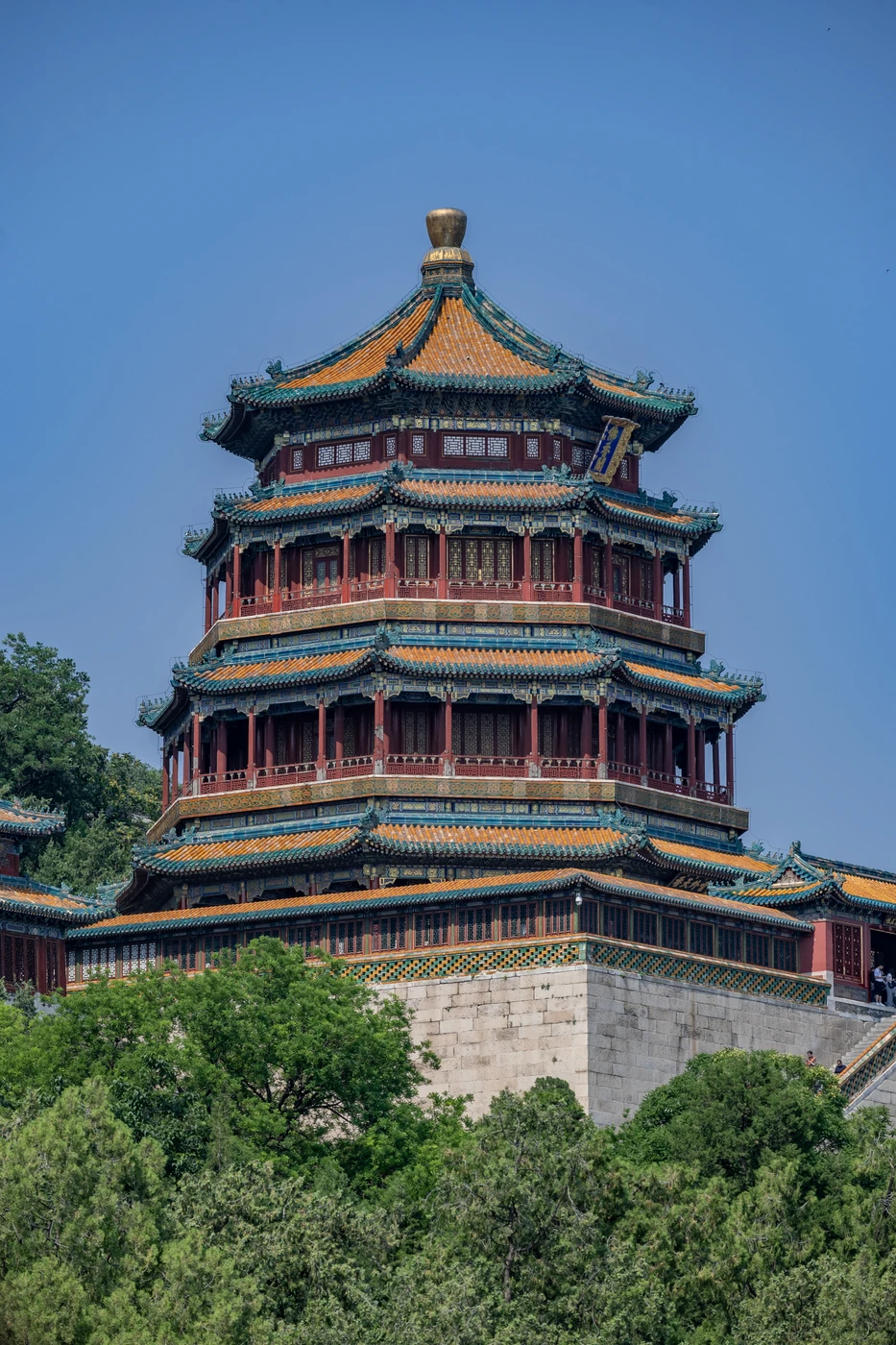


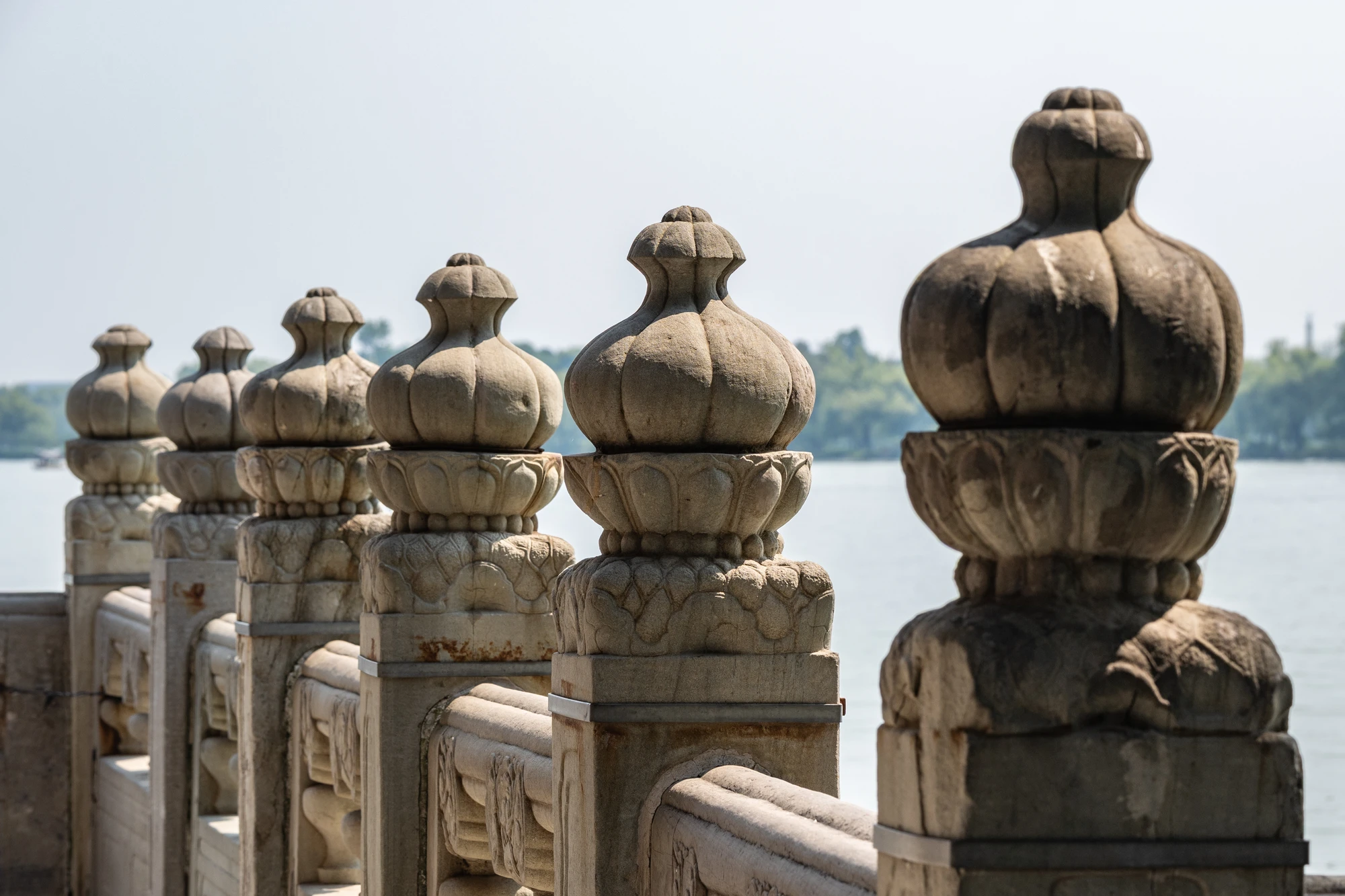

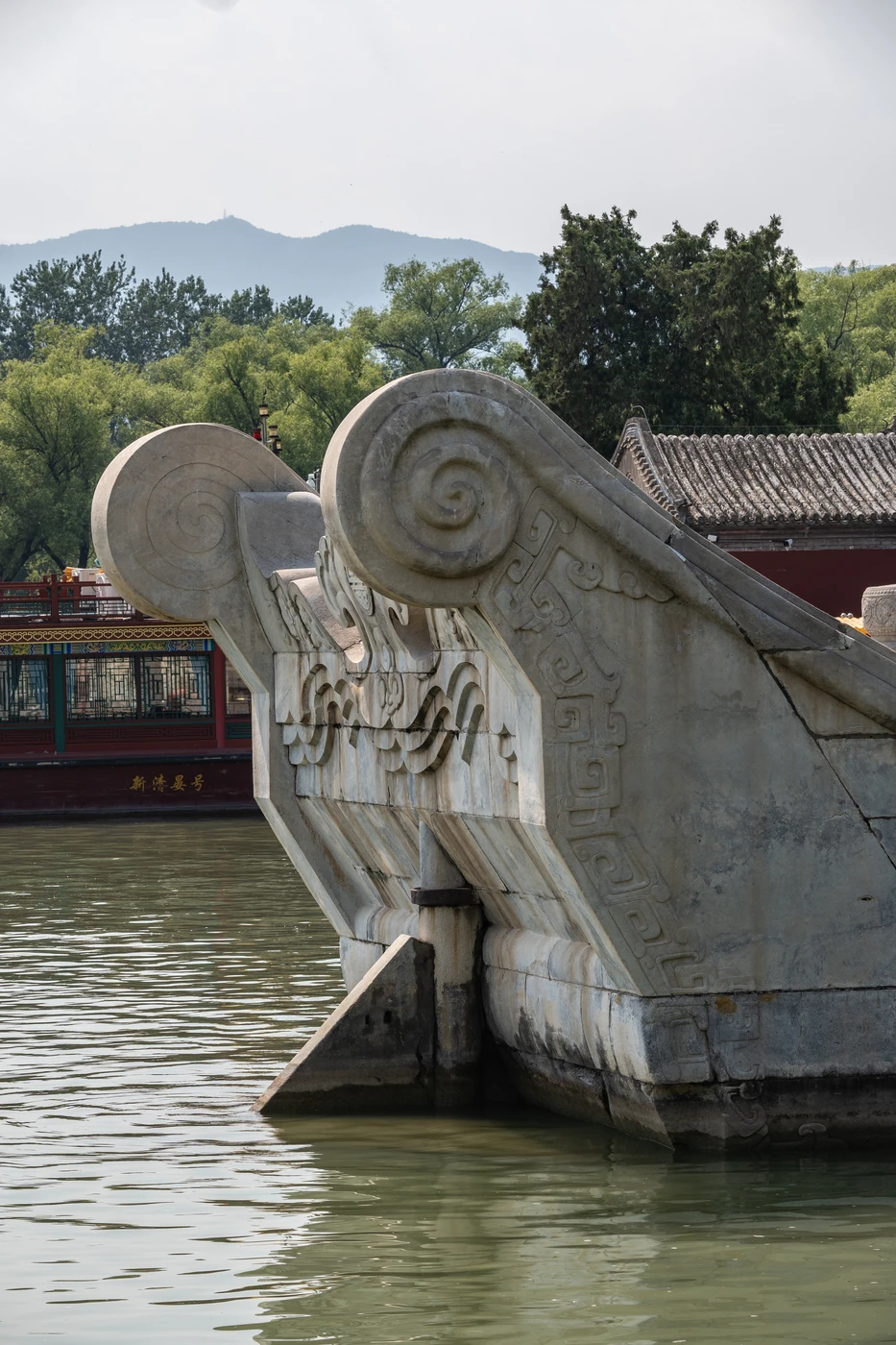
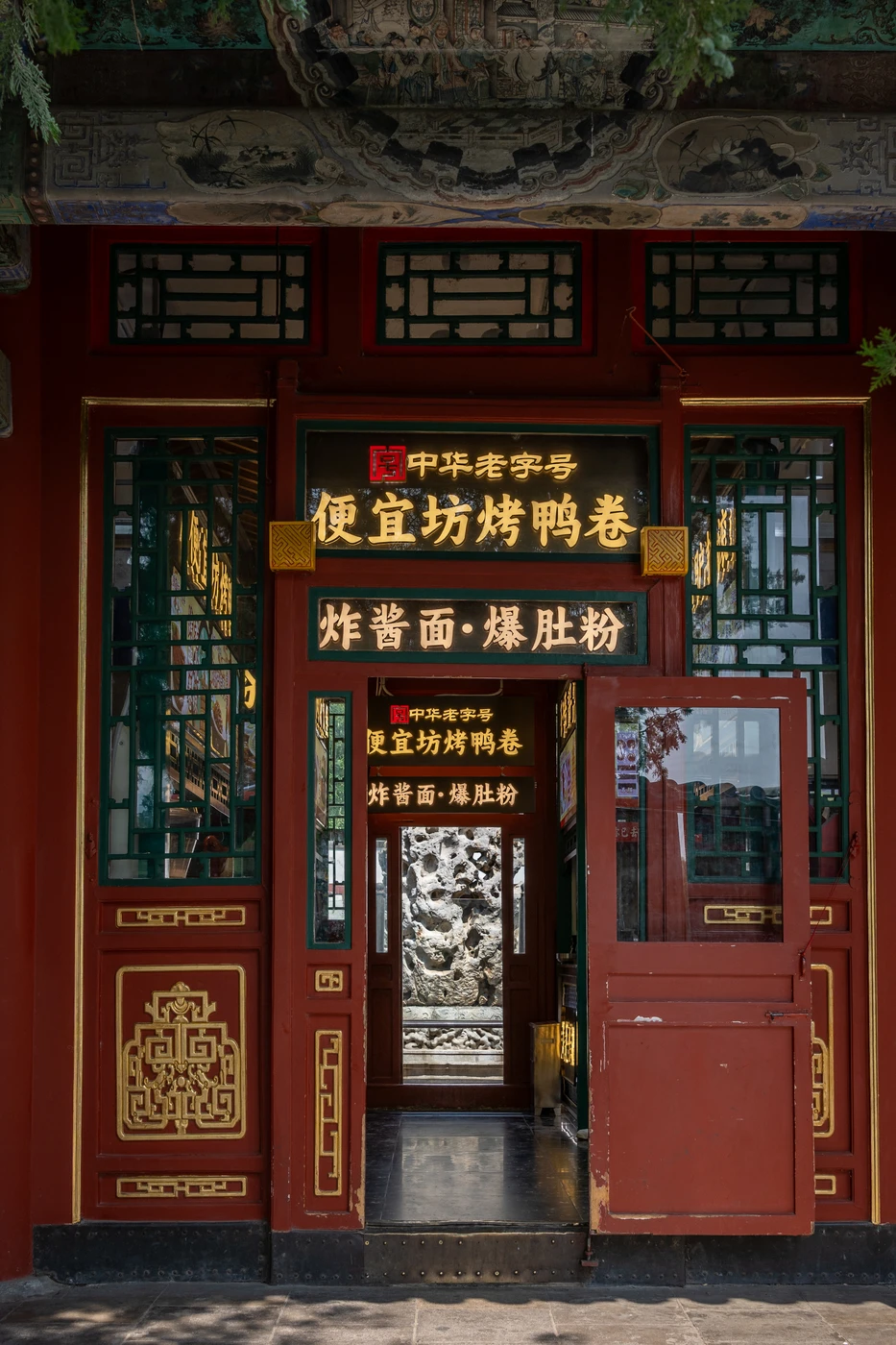
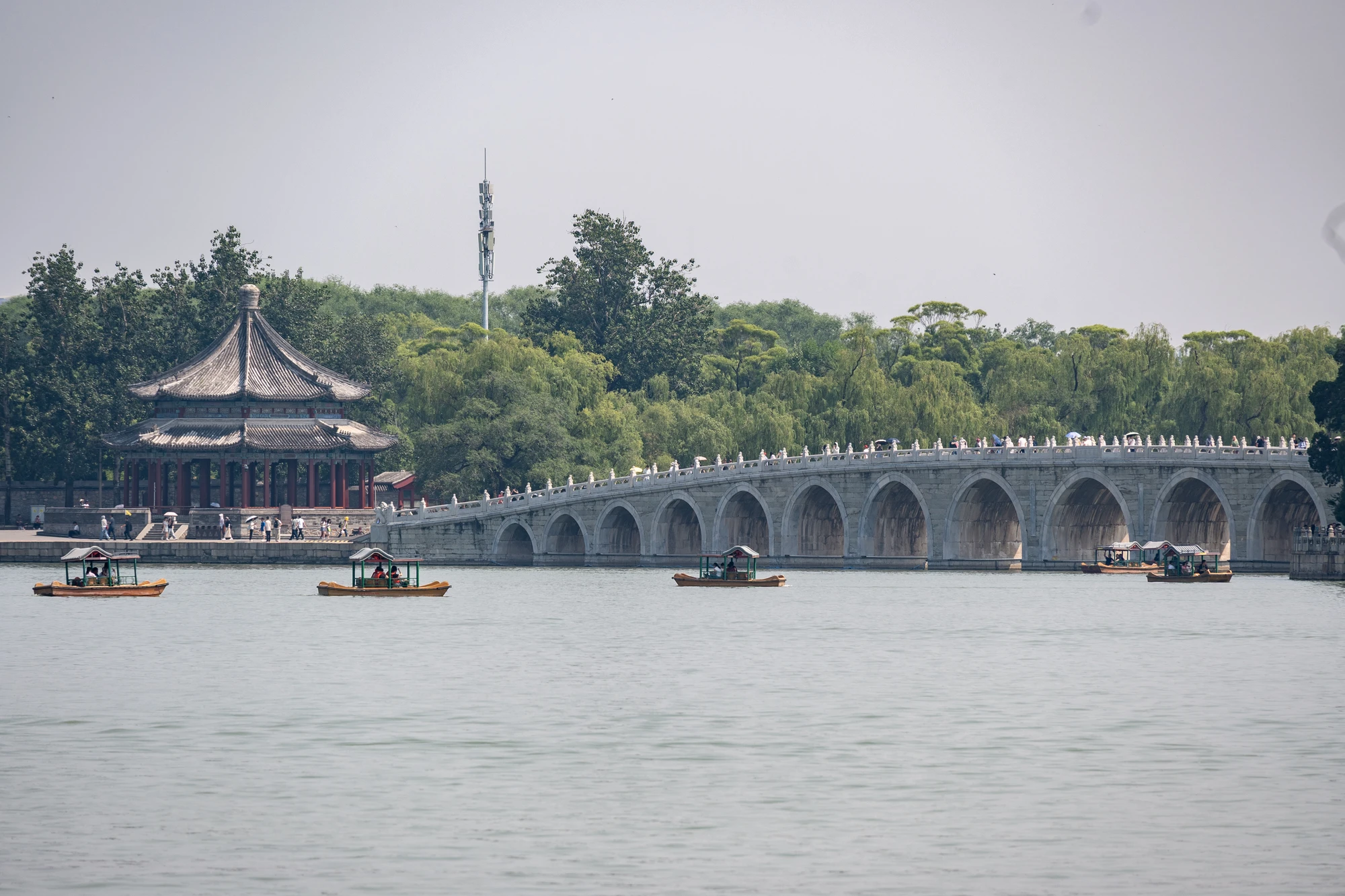

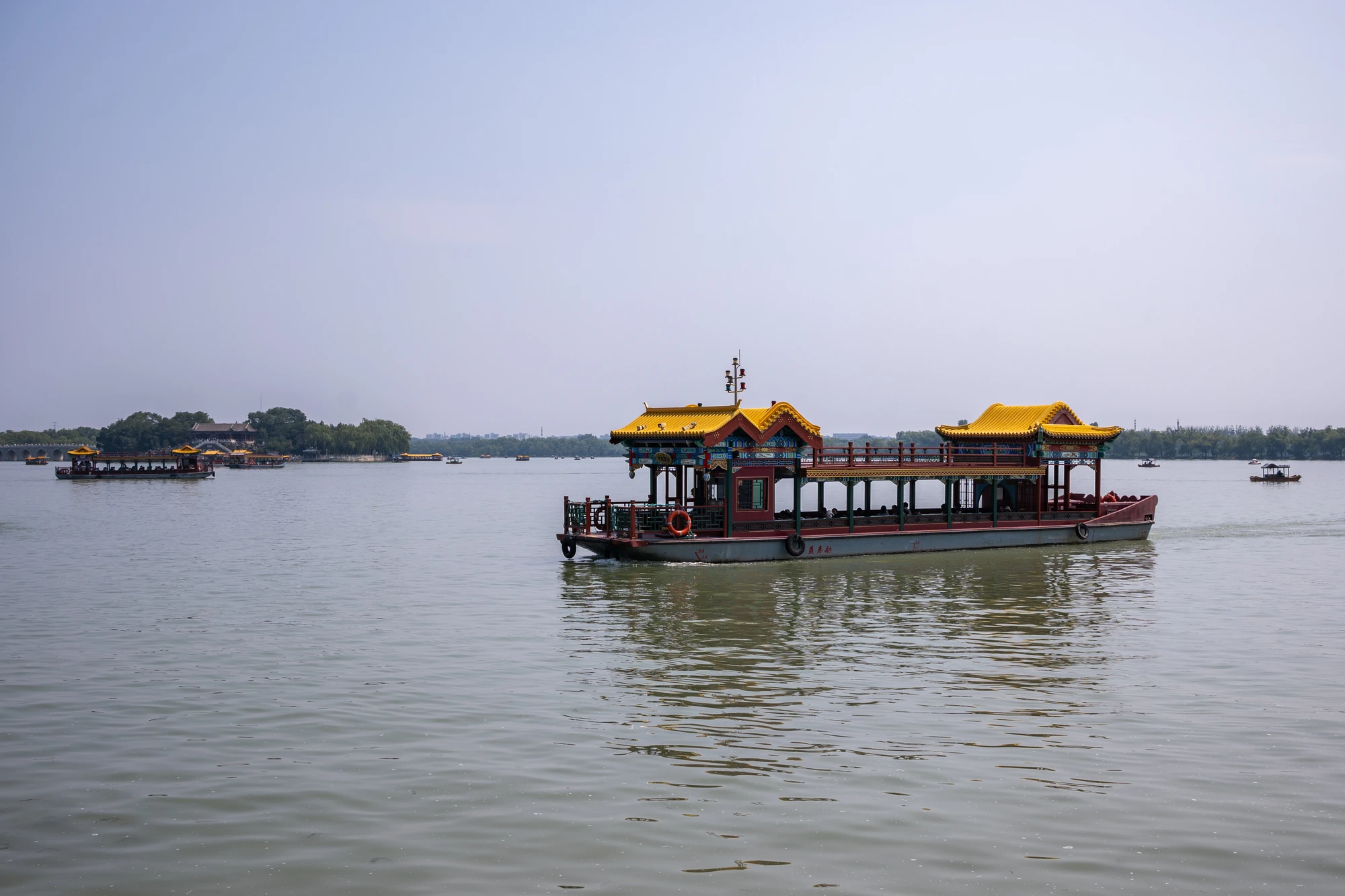

The Summer Palace is dominated by Longevity Hill, which rises about 60 metres above the surrounding landscape, and Kunming Lake, a large man-made lake covering approximately 2.2 square kilometres. When the lake was expanded, the excavated soil was used to enlarge Longevity Hill. In 1750, the imperial garden was known as the Garden of Clear Ripples.
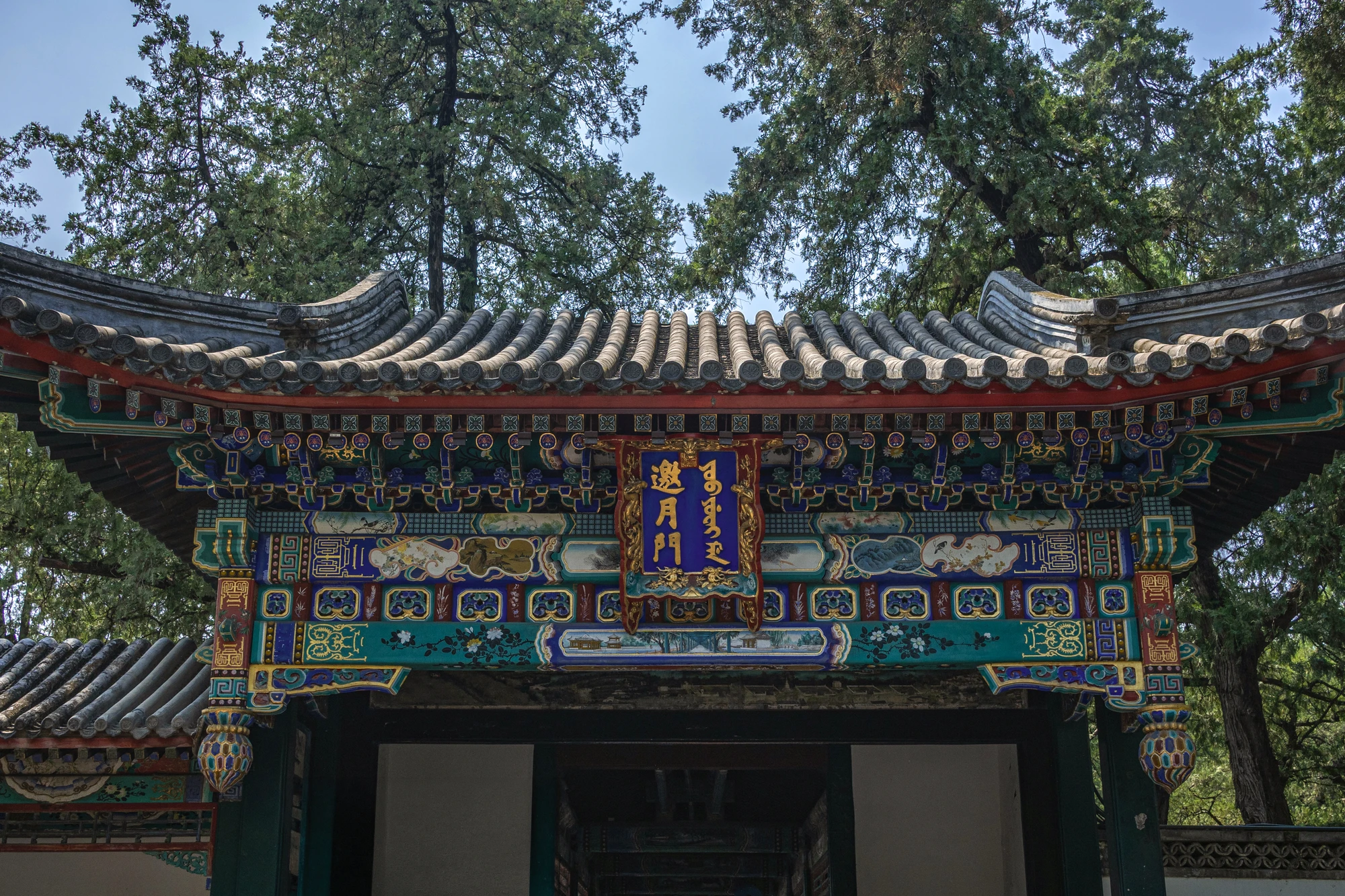
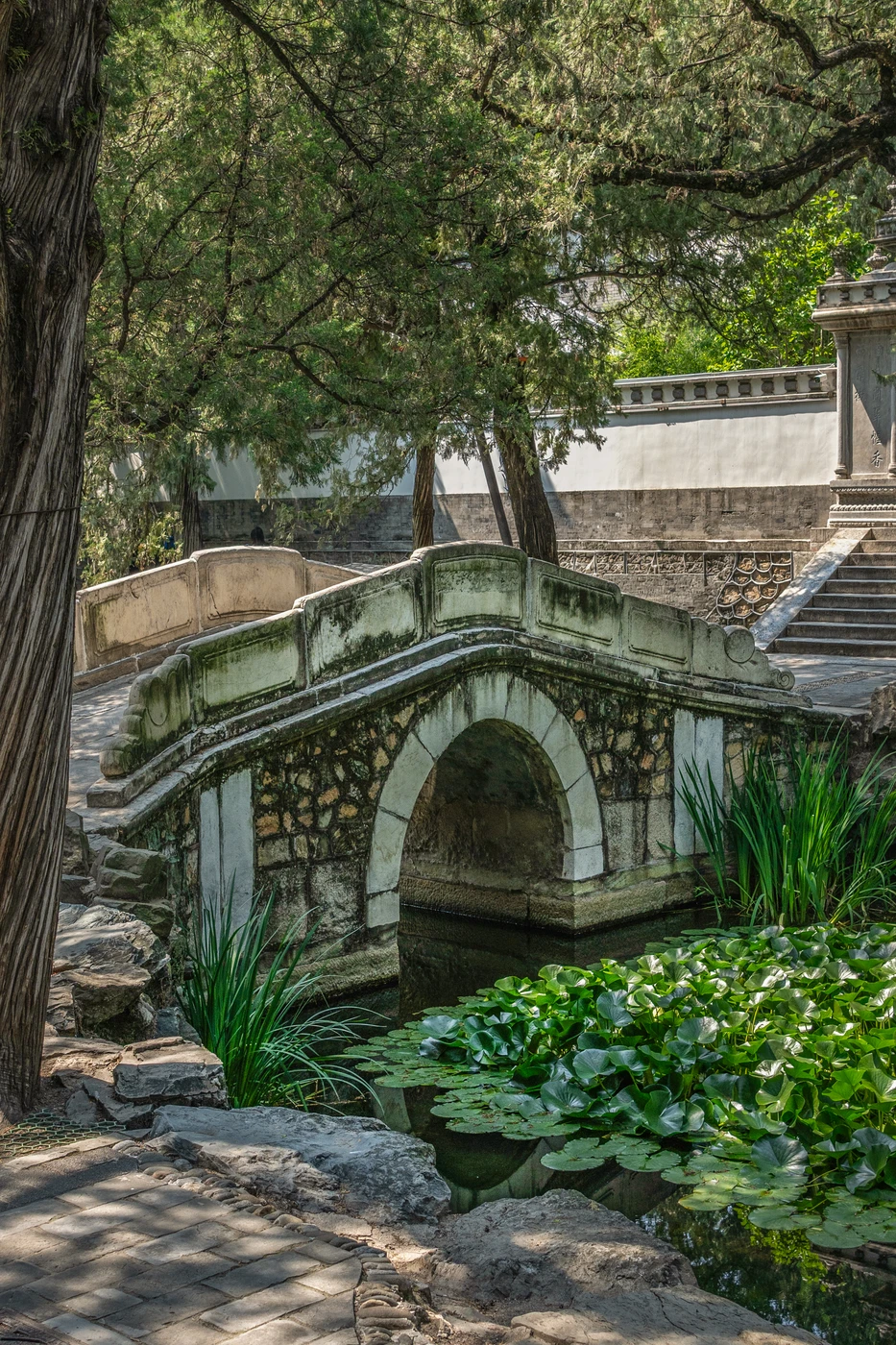
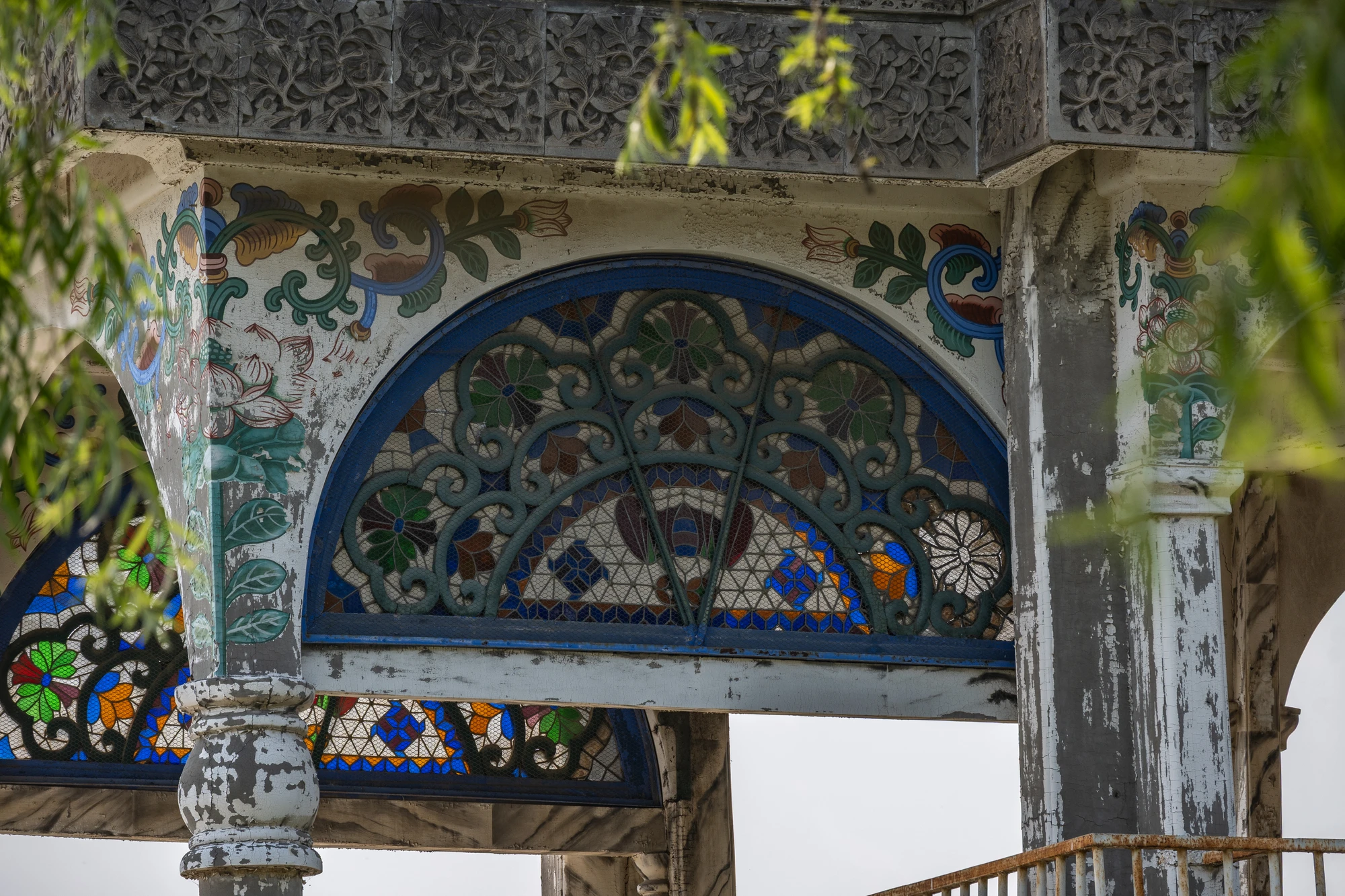
Today, the Summer Palace is one of the best-preserved imperial gardens in China. The combination of traditional buildings, gardens, trees, water and hills creates a beautiful and varied landscape. One of the most enjoyable ways to explore the area is to walk along the long lakeside corridor and paths, where the scenery constantly changes.
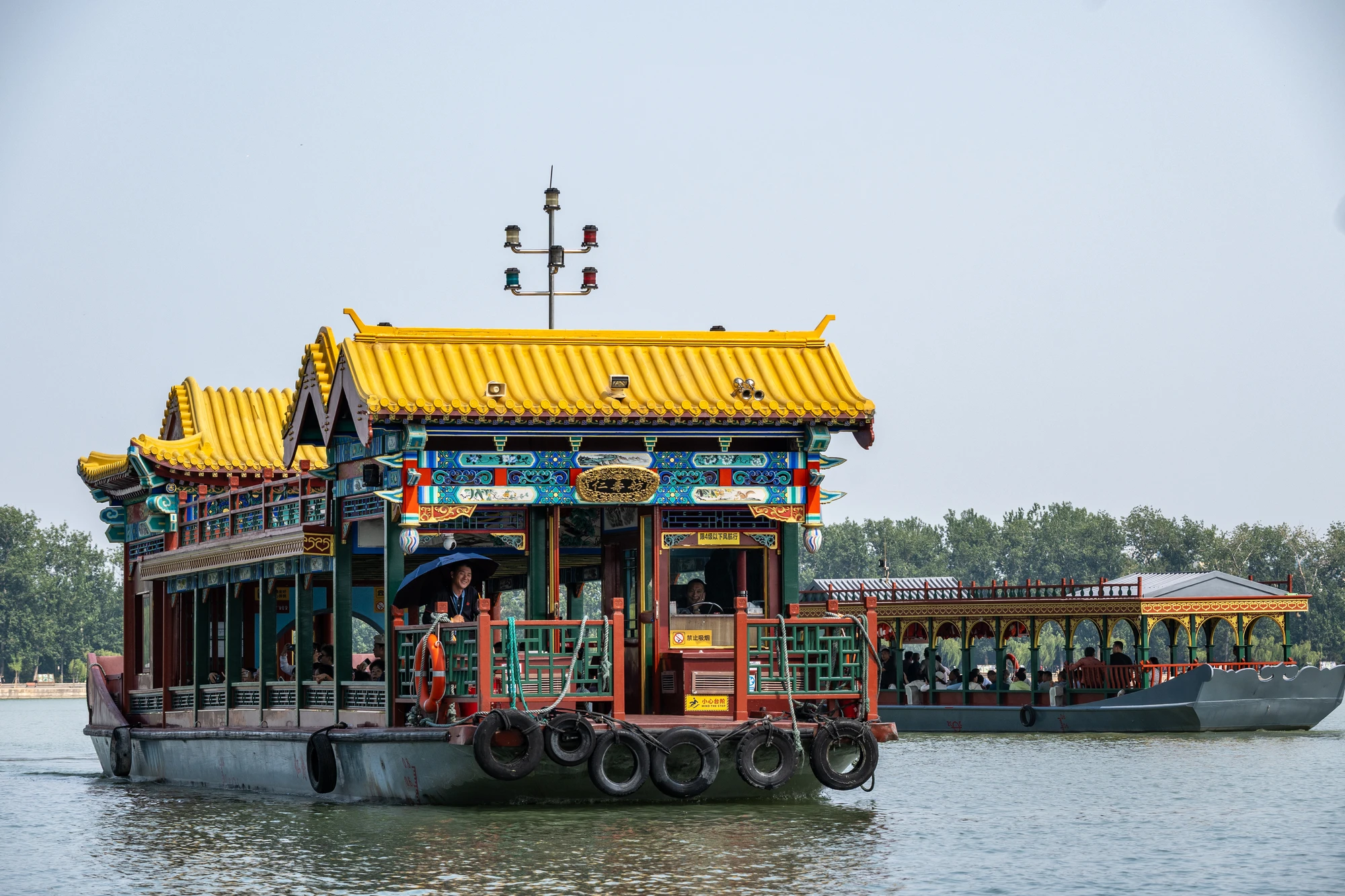
If you don’t want to explore the entire area on foot, boat trips are also available on Kunming Lake. Seeing the palace and Longevity Hill from the water offers a completely different perspective and creates additional opportunities for photography.
Like many of Beijing’s major attractions, the Summer Palace can be very busy. From a photographer’s point of view, however, this also creates interesting opportunities. In addition to landscapes and architectural photographs, the gardens are a great place for portraits and candid photography.
I mainly used a 24mm lens here, which worked particularly well for capturing the gardens, lake, architecture and wider landscapes. For portraits and more distant subjects, I switched to a 50–250mm lens.
On a bright sunny day, the difference between the strongly illuminated areas and the deep shadows in the gardens can be considerable. This can make exposure challenging, particularly when photographing people. A reflector or fill flash can be useful when shooting portraits in these conditions.
I also noticed a number of visitors wearing traditional-style Chinese clothing around the gardens. Some were happy to pose for photographs, which provided another interesting opportunity for portrait photography and added a distinctive atmosphere to the images from my visit.